
A good Tanzania safari packing list is shorter than most people expect. You spend the days in a vehicle, most camps offer laundry, and light aircraft limit how much you can bring. Below is the list our guides give every guest, with the reasons behind each item.
The Tanzania safari packing list at a glance
- 3–4 shirts or T-shirts in neutral colours, plus 2 long-sleeved shirts
- 2 pairs of light trousers and 1 pair of shorts
- A warm fleece or down jacket for early mornings
- A light rain jacket in the green season
- Comfortable closed shoes and a pair of sandals
- A wide-brimmed hat, sunglasses and a buff or scarf for dust
- Binoculars, a camera and spare batteries or a power bank
- Sunscreen, insect repellent and any personal medicines
- Passport, visa, insurance details and some US dollars in small notes
Clothes: colours and layers
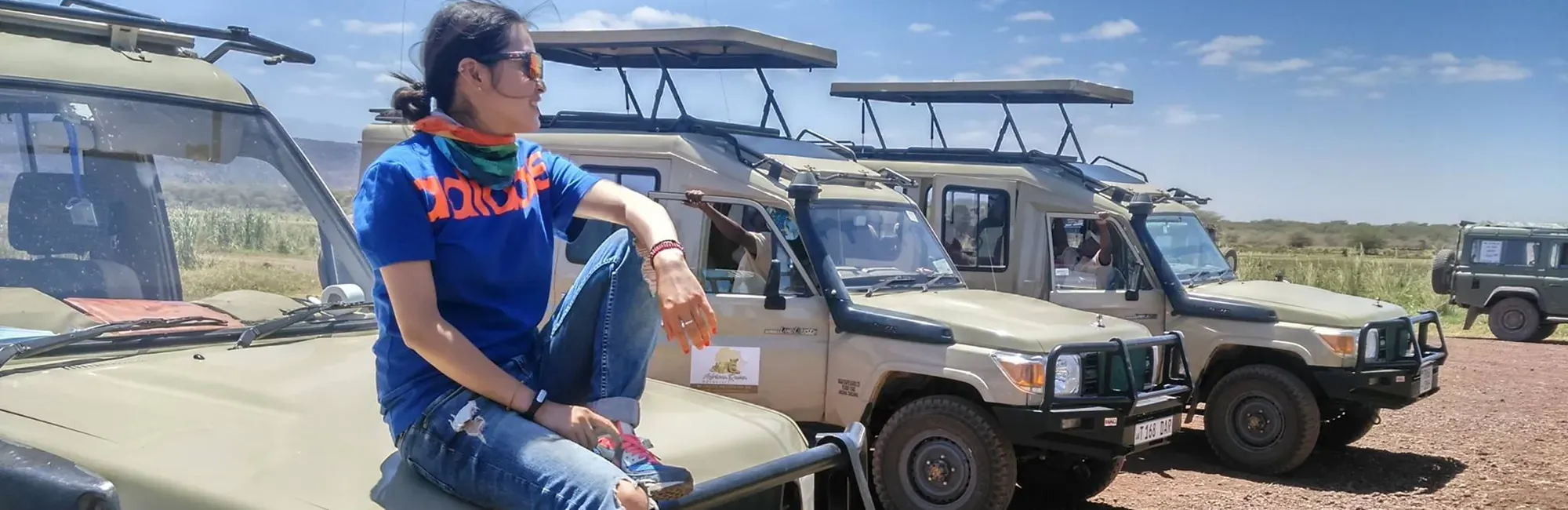
Choose khaki, olive, beige and brown. Bright colours stand out to animals, while dark blue and black attract tsetse flies in some parks, so leave them at home. Do not pack camouflage clothing: it is reserved for the military in Tanzania and can cause problems at checkpoints.

Layers matter more than people expect. Game drives start before sunrise, when it can be cold, especially at the Ngorongoro Crater rim, which sits above 2,200 metres. By midday it is warm, so a fleece you can take off is better than one thick coat. Long sleeves in the evening also help against mosquitoes.
Shoes, bags and luggage limits
You will walk little on a vehicle safari, so comfortable trainers or light walking shoes are enough. However, if you plan a walking safari, bring broken-in boots.
Pack in a soft duffel bag rather than a hard suitcase. Light aircraft between the parks usually allow about 15 kg per person including hand luggage, and the bags must fit into a small hold. If you fly only one way, we can often store extra luggage in Arusha.
Camera and binoculars
Binoculars are the most useful thing you can bring: one pair per person is ideal. For photography, a zoom lens of 200 mm or more makes a real difference with birds and shy animals. Bring spare memory cards and a power bank, since some camps charge batteries only at certain hours. A bean bag helps steady a long lens on the vehicle roof. Our guide to photography safaris has more tips.

Health and comfort
- Malaria tablets if your doctor recommends them, and a DEET-based repellent
- High-factor sunscreen and lip balm
- A small first-aid kit with plasters, painkillers and rehydration salts
- Hand sanitiser and wet wipes for long drives
- Any prescription medicines in your hand luggage
Check vaccinations with a travel clinic at least six weeks before you go. Our Tanzania travel tips cover health and visas in more detail.
What not to pack
Since 2019, Tanzania has banned plastic carrier bags, and they can be confiscated on arrival, so use reusable bags for your toiletries. Leave behind expensive jewellery, drones (they need a permit, and Tanzania National Parks does not allow them in the parks without one), and more clothes than you need.
Adding Zanzibar or Kilimanjaro
If you finish on the coast, add swimwear, a light cover-up and reef-safe sunscreen; our Zanzibar beach guide explains what to expect. Climbing Kilimanjaro needs a separate kit list with warm layers, a sleeping bag and boots, which we send to every climber; the Kilimanjaro guide gives an overview.
Finally, the best time of year changes what you pack: rain jackets matter in April and May, warm layers in June and July. Read our guide to the best time to visit Tanzania, then browse our safari tours to plan the trip itself.