 Wildlife Safari Popular
8-Day Tanzania Safari with Lake Eyasi & Maasai Culture
Arusha · Tarangire National Park · Central Serengeti (2) · Ngorongoro Crater · Lake Eyasi · +1 more
 Read
Tanzania Visa Guide 2026: e-Visa, Costs and Entry Rules
Explore Destination · Tanzania
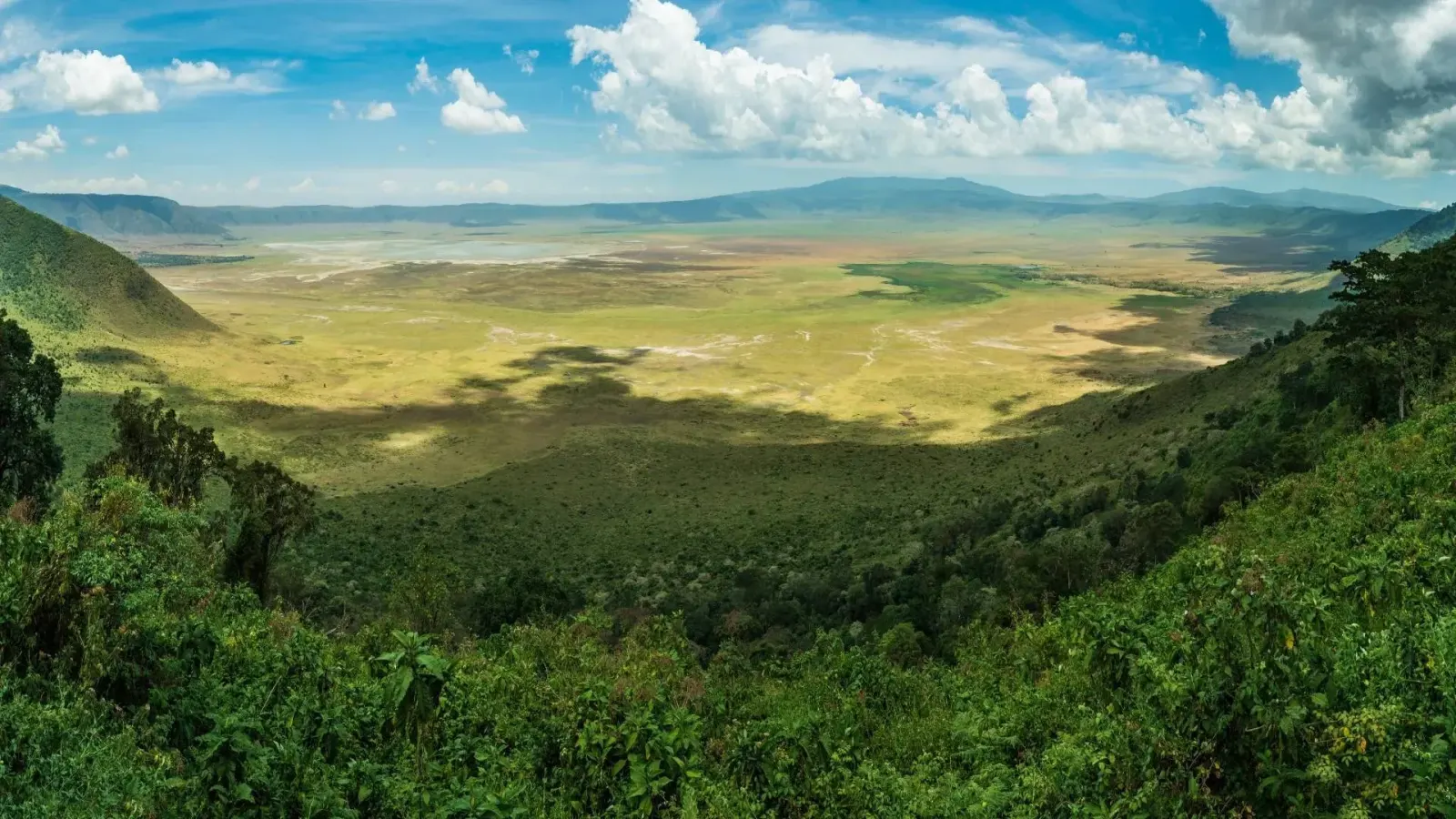
Ngorongoro Crater safari: Ngorongoro Crater is the collapsed cone of a volcano that was once comparable in height to Kilimanjaro.
Ngorongoro Crater is the collapsed cone of a volcano that was once comparable in height to Kilimanjaro. What is left is a caldera about 19 km across, with walls 600 metres high and a floor of roughly 260 km². Around 25,000 large animals live inside it, which makes this the most concentrated game viewing in Tanzania.
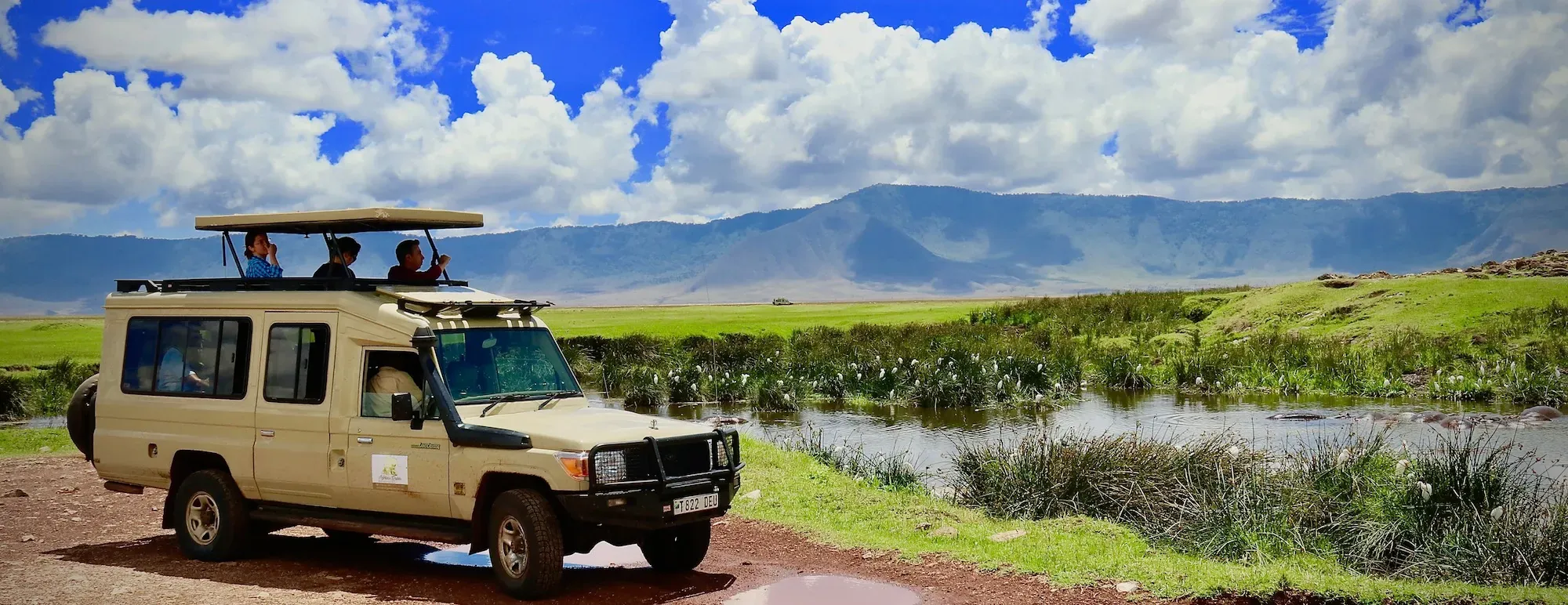
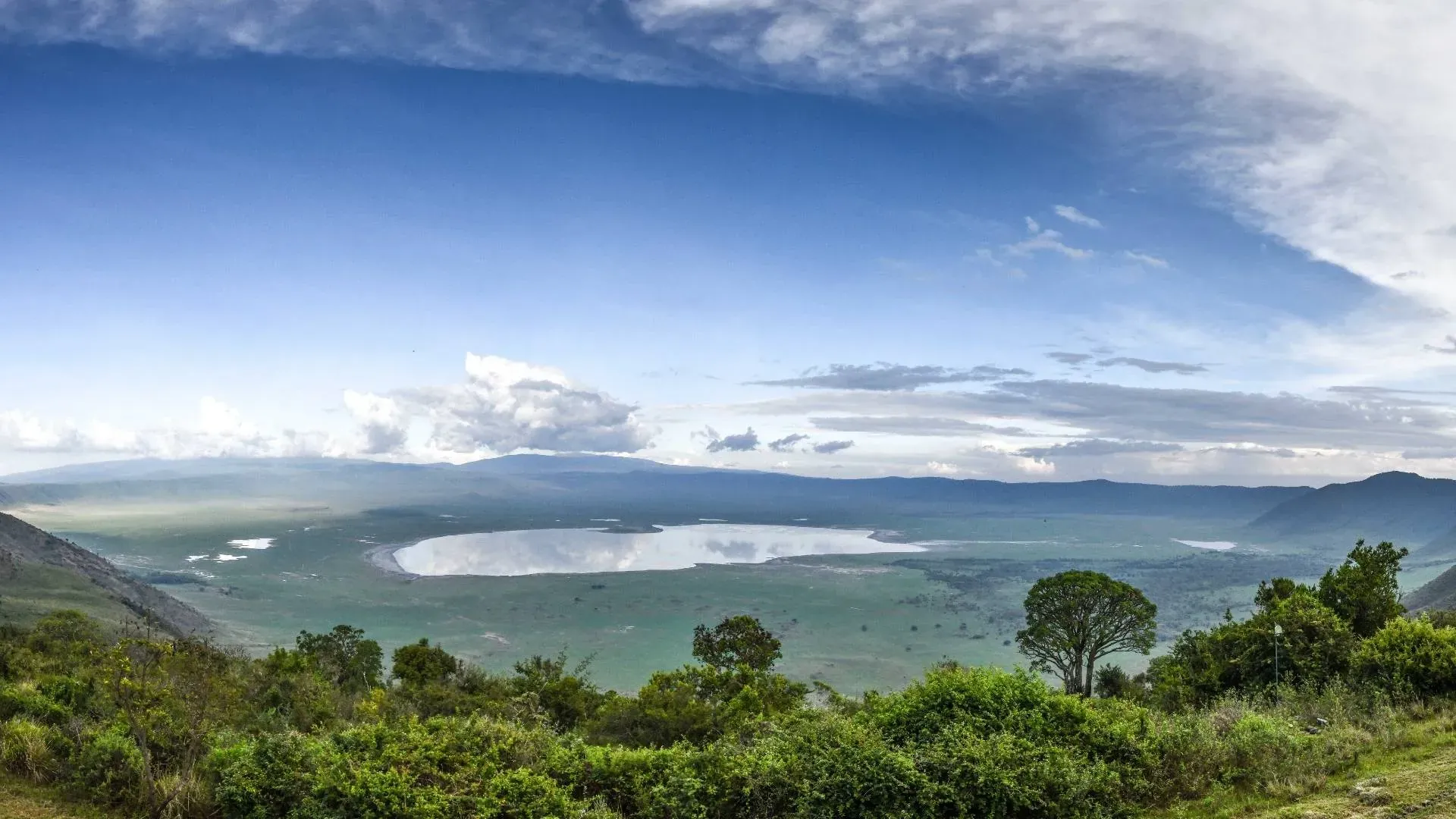
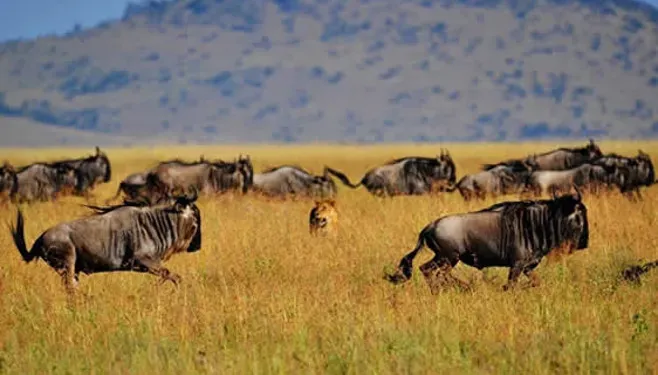
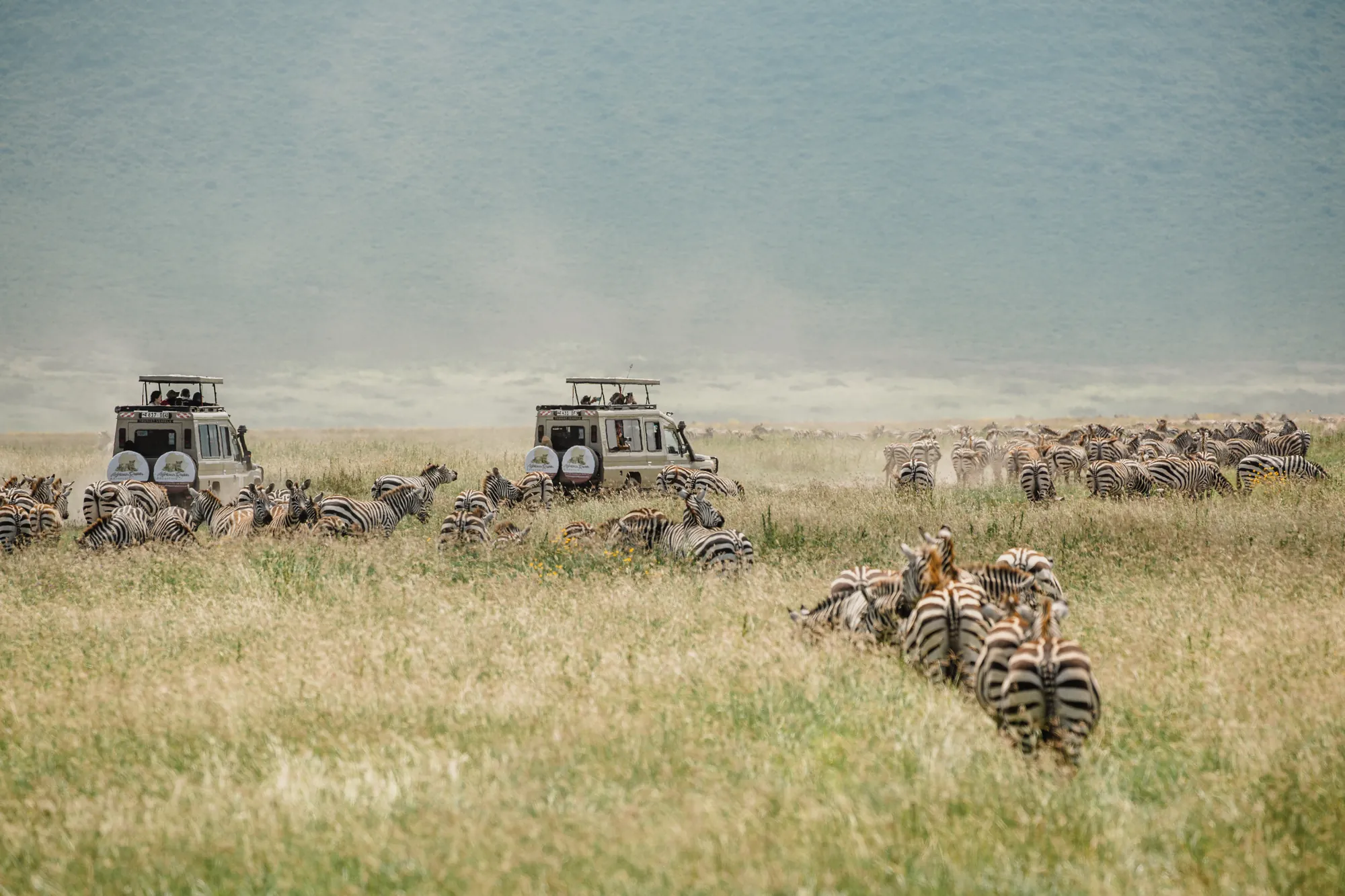
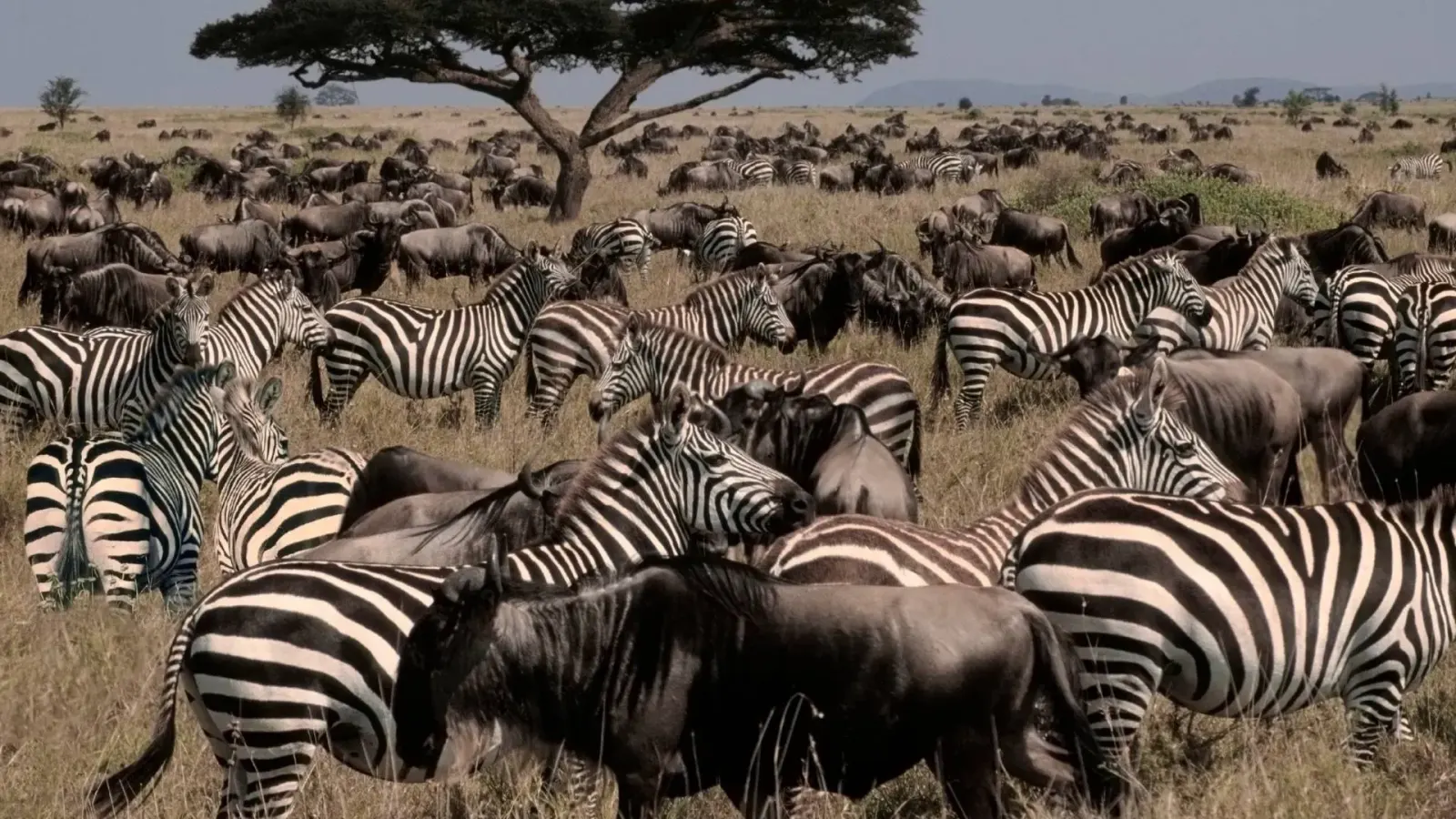
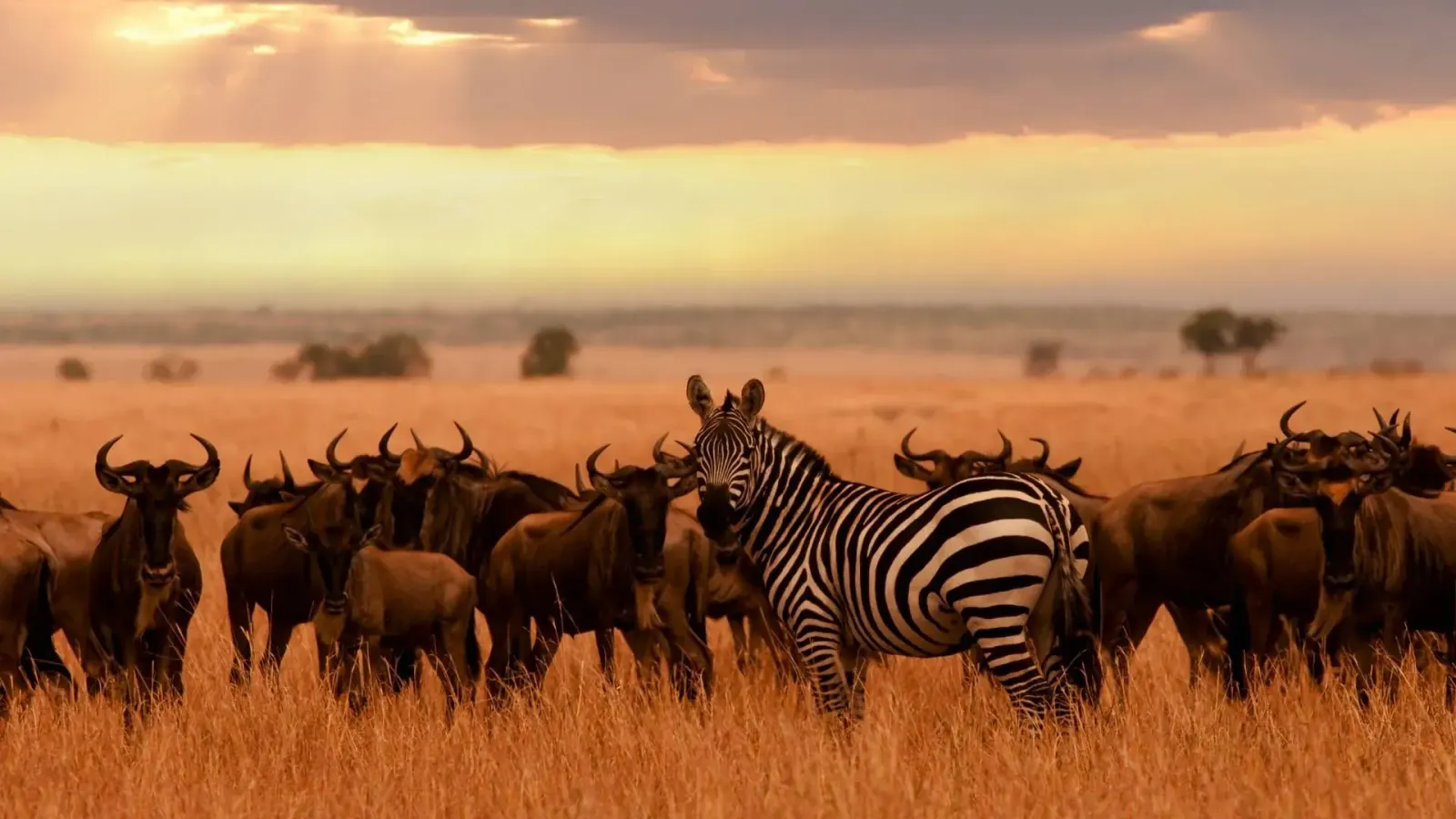
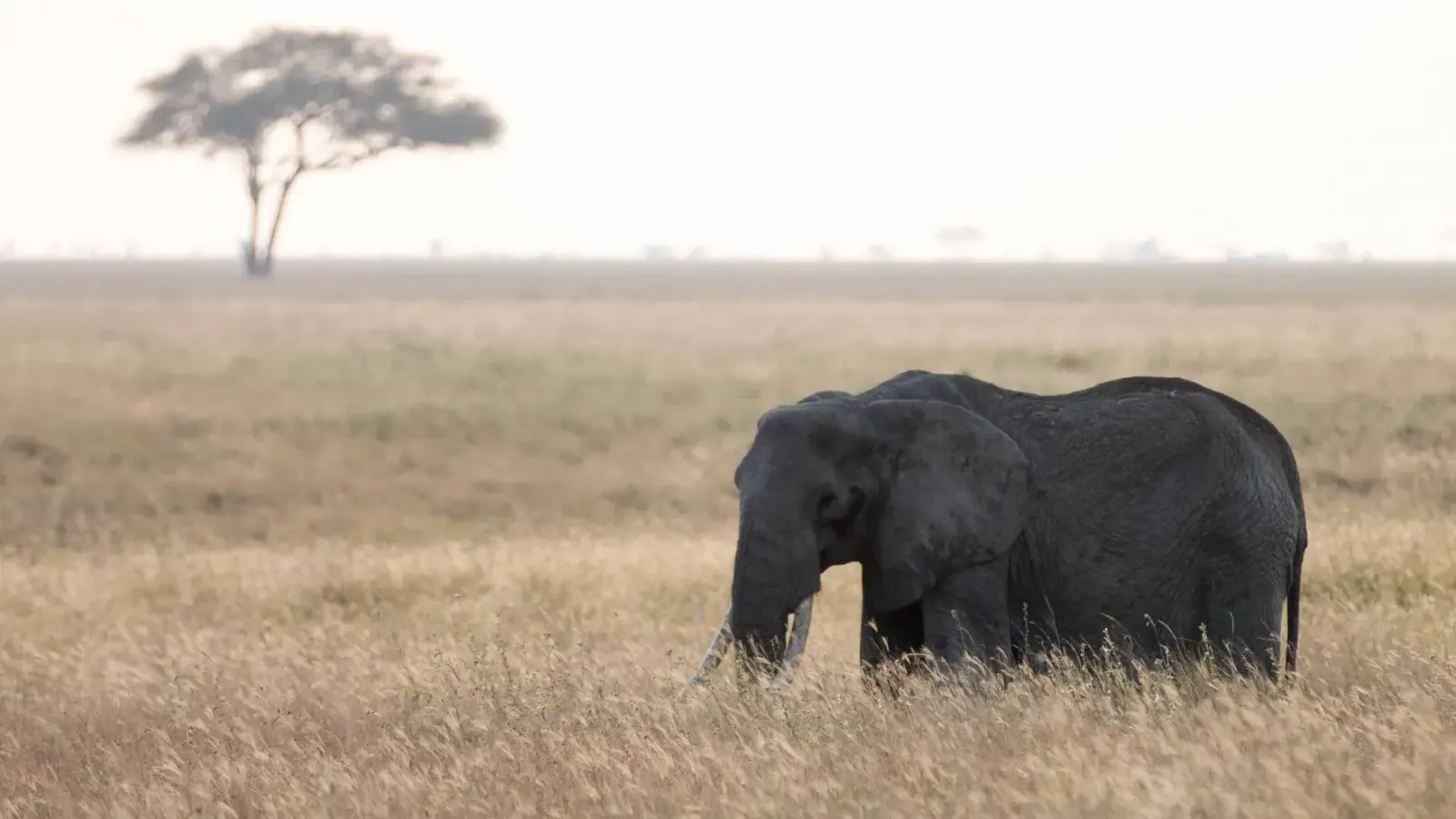
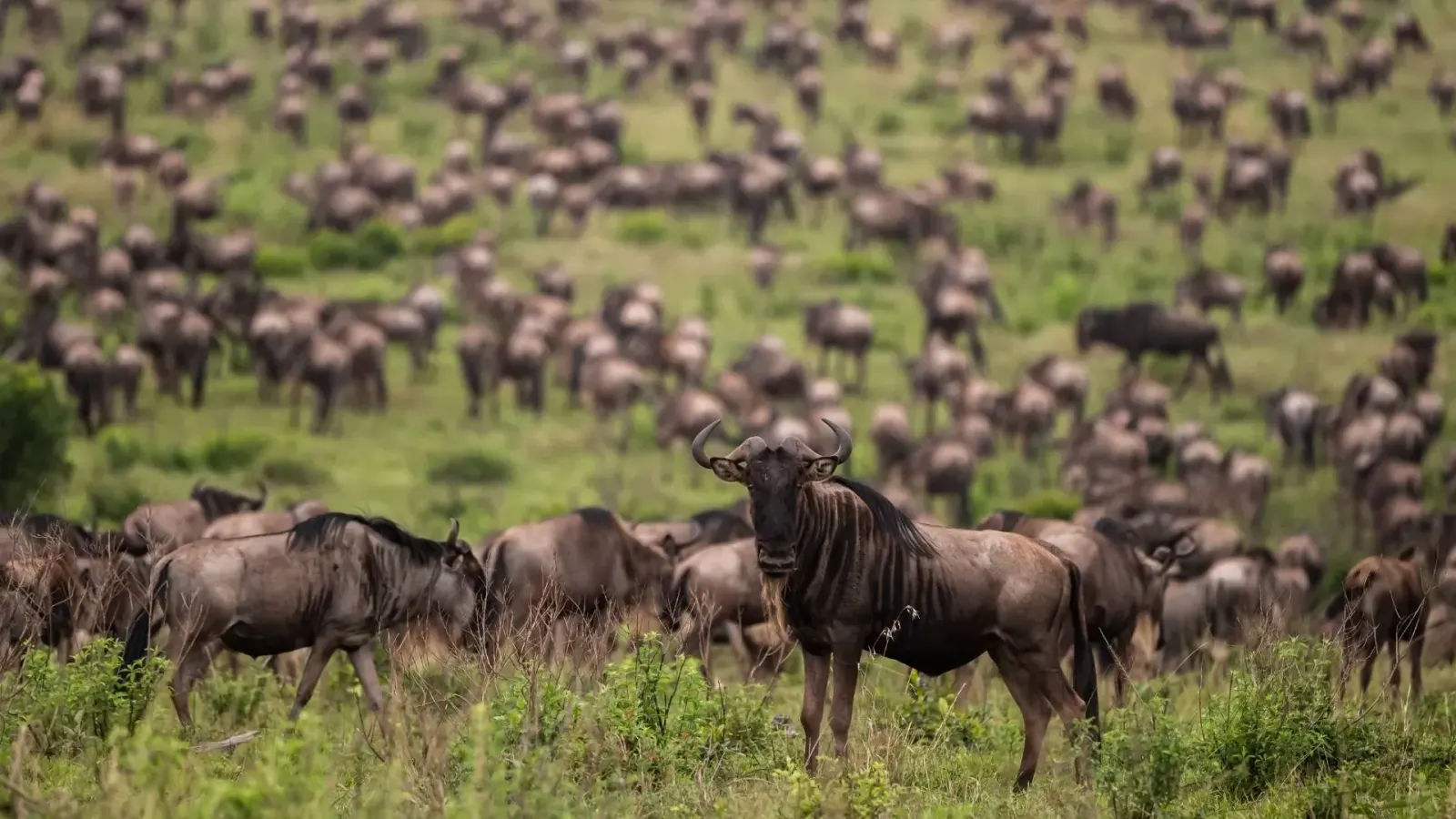
The crater is the best place in the country to see black rhino in the open. Lion, spotted hyena, buffalo, wildebeest and zebra are resident, old bull elephants with heavy tusks feed in the Lerai forest, and Lake Magadi in the centre often has flamingos. Two things you will not find: giraffe, which do not come down the steep walls, and impala.
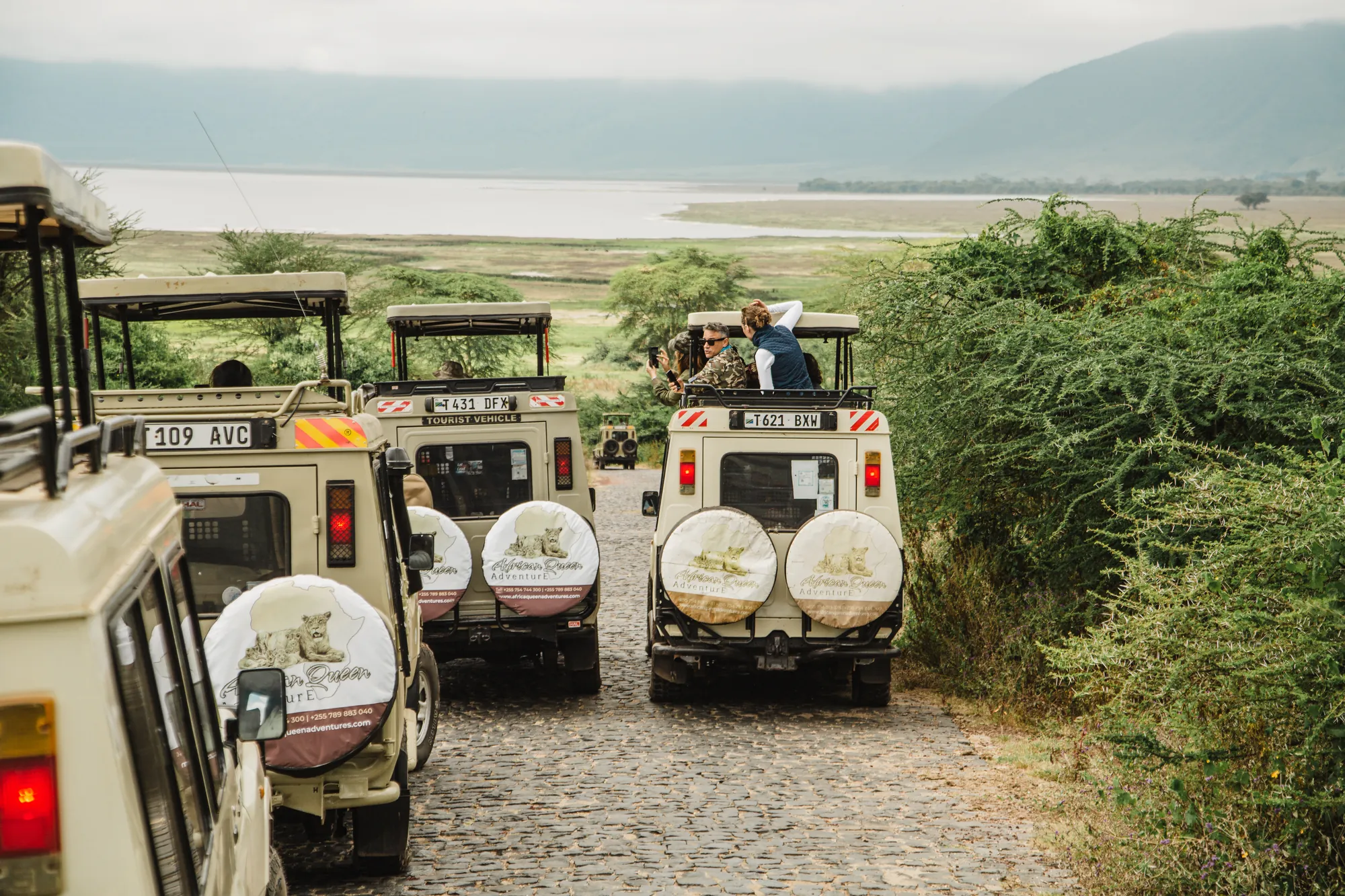
Vehicles descend by the Seneto road and climb out by Lerai, and each visit is limited to about six hours on the floor. Going down at 6 am when the gate opens gives you the best light, the most active predators and the fewest vehicles. Lunch is a picnic at the Ngoitokitok hippo pool.
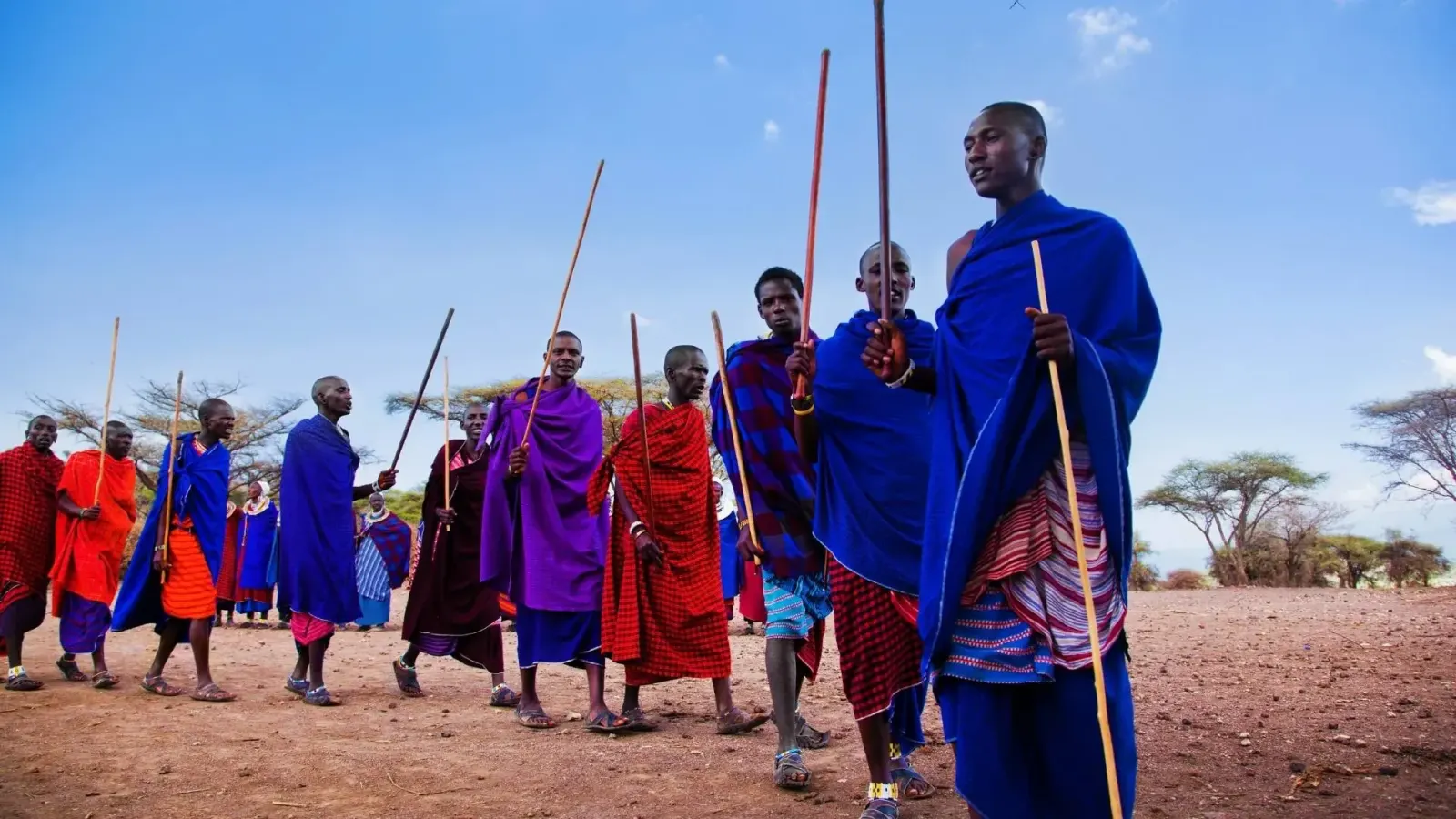
The crater is one part of the 8,292 km² Ngorongoro Conservation Area, a UNESCO World Heritage Site where Maasai pastoralists live alongside wildlife. It also contains Olduvai Gorge, one of the most important early-human fossil sites in the world, and the Empakaai and Olmoti craters for walking. The rim sits at about 2,300 m, so mornings and nights are cold all year. The gate is around 180 km from Arusha, three to four hours by road.
The crater's animals do not migrate out, so game viewing is good in every month. June to October is dry, cold in the mornings and busiest. November to May is greener and quieter, with flamingos more likely on the lake; April and May can be misty and wet on the rim.
Ngorongoro Crater and the other places we travel to nearby.
Ngorongoro Crater
Sample itineraries. Every trip is private, so we change the days, lodges and pace to suit you.
Wildlife Safari Popular Arusha · Tarangire National Park · Central Serengeti (2) · Ngorongoro Crater · Lake Eyasi · +1 more
 Great Migration Popular
Arusha · Tarangire National Park · Central Serengeti (2) · Ngorongoro Crater · Lake Eyasi · +1 more
 Beach & Island Popular
Zanzibar (2) · Tarangire National Park · Central Serengeti (2) · Ngorongoro Crater · Lake Eyasi
 Great Migration Popular
Zanzibar (3) · Serengeti National Park (2) · Karatu · Lake Eyasi
 Beach & Island Popular
Arusha · Tarangire National Park · Central Serengeti (3) · Zanzibar (3) · Stone Town
 Cultural Immersion Popular
Arusha (2) · Tarangire National Park · Ngorongoro Crater (2) · Central Serengeti (3) · Lake Manyara National Park (2)
 Mountain Trekking Popular
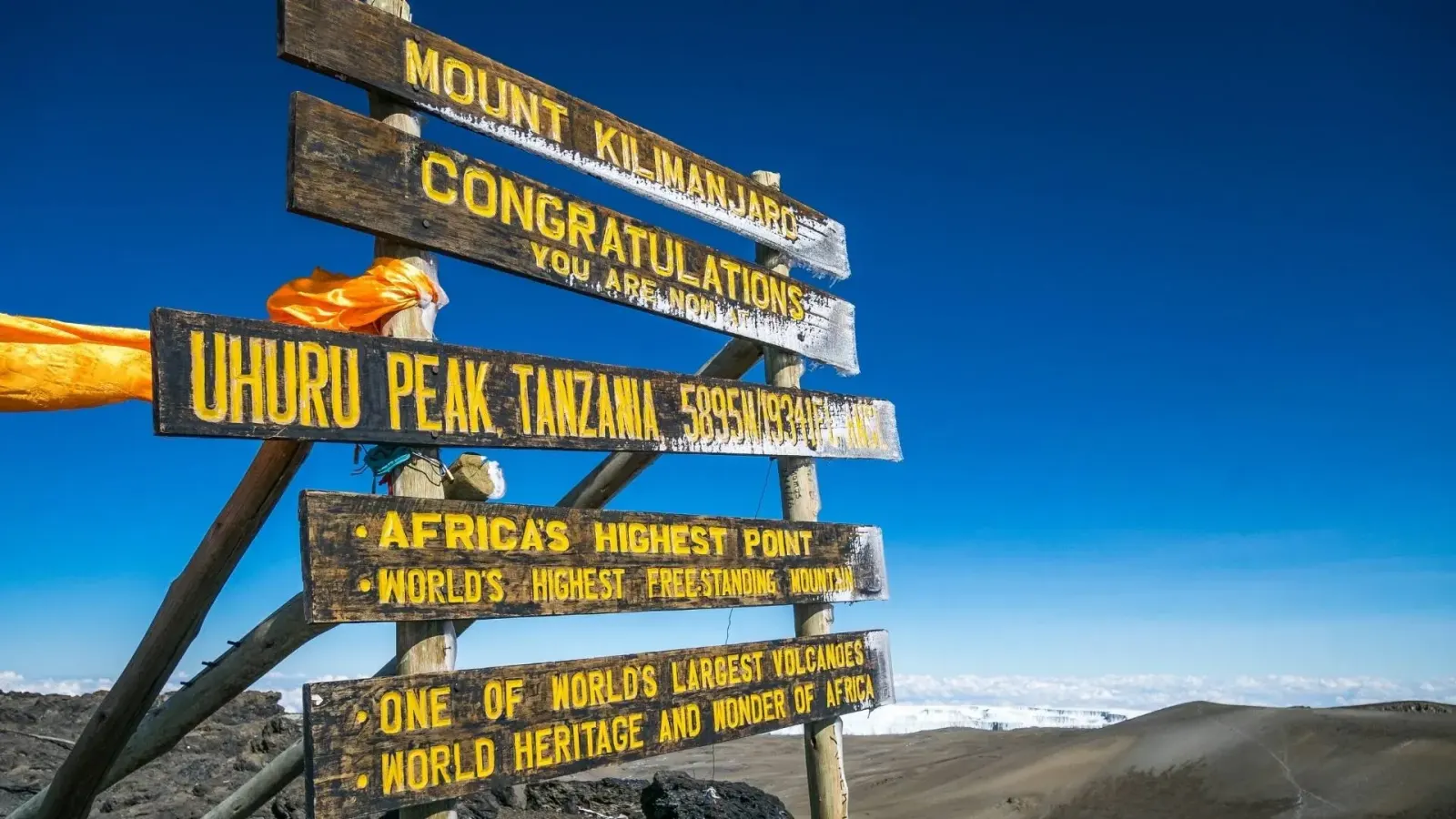
Moshi (Kilimanjaro) (2) · Mount Kilimanjaro National Park (5) · Tarangire National Park · Ngorongoro Crater · Arusha
 Mountain Trekking
 Cultural Immersion
Arusha · Tarangire National Park · Lake Manyara National Park · Ngorongoro Crater · Lake Eyasi
Our team in Arusha answers in English, French, German and Spanish.
A crater visit is limited to roughly six hours on the floor per vehicle, which is enough to cover it well. Most itineraries allow one crater day with a night before or after in Karatu or on the rim.
Yes. The crater has a small protected population of black rhino and is the most reliable place in Tanzania to see them, usually at a distance on the open grassland in the early morning.
Rim lodges have the view and the quickest descent in the morning but cost more and are cold at night. Karatu is about 30 to 45 minutes from the descent road, is warmer and has a wider range of prices.
The crater walls are too steep for giraffe to descend comfortably and the floor has little of the tall acacia browse they feed on. You will see them on the rim and in the surrounding conservation area.
Tell us your dates and what you would like to see. A specialist in Arusha sends a route and a clear proposal within 24 hours.
Plan this tripLicensed & trusted
We are a licensed Tanzanian tour operator, working with the national tourism bodies, parks and conservation authorities, and the organisations that look after Kilimanjaro’s porters.





💬 Connect to Live Support
Choose a department to speak with our team:
Our team is currently unavailable
Leave your details and we’ll get back to you shortly.
This session has timed out for your security. Start a new conversation to continue.
AI Safari Agent
Hello! 👋 Need help planning your safari?