
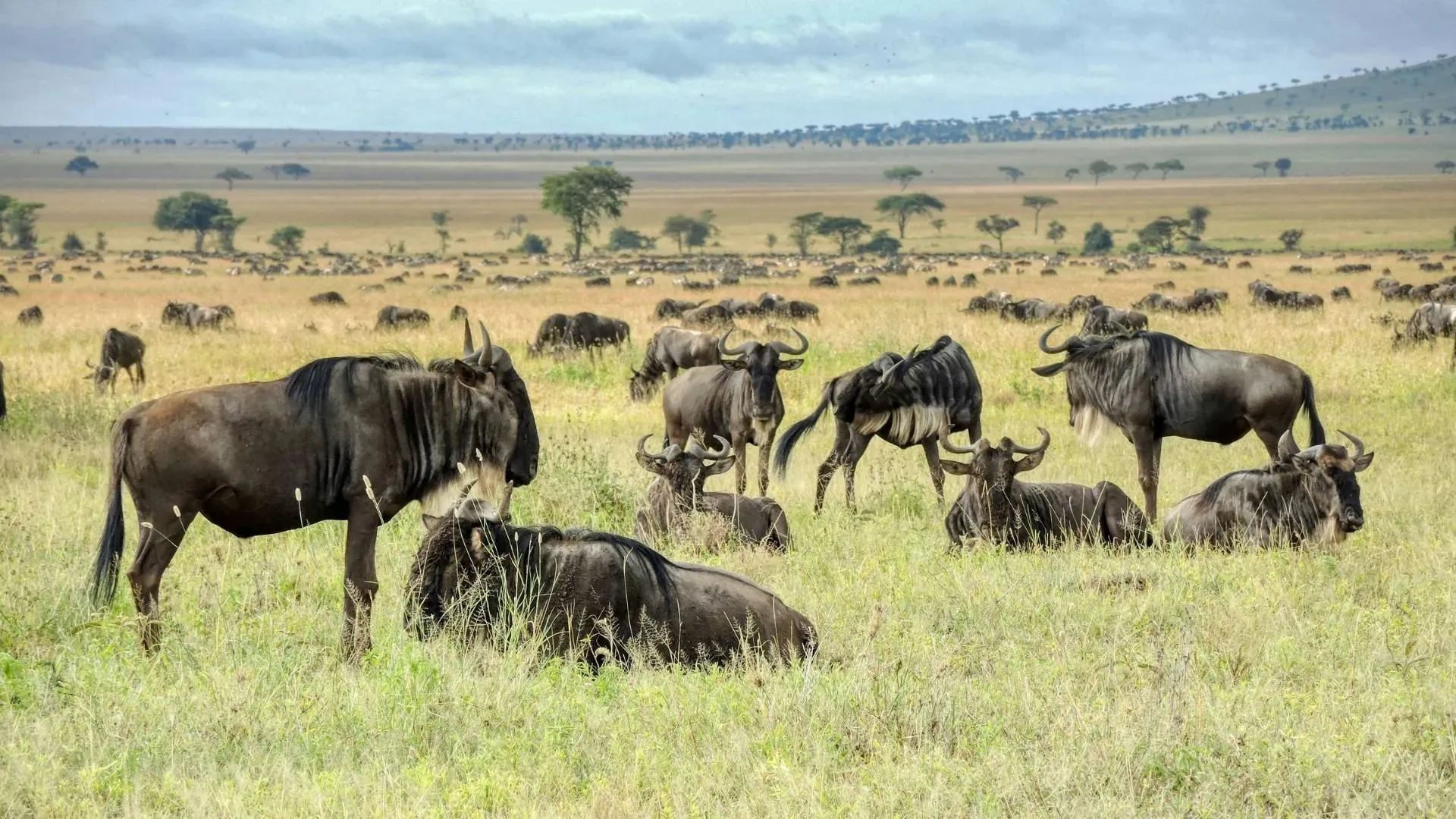
The wildebeest migration moves through the Serengeti all year, so there is no single "migration season", only the right place for each month. This guide follows the herds from the calving plains of Ndutu to the Mara River crossings.
The Great Migration is the movement of roughly 1.3 million wildebeest, along with more than 200,000 zebra and many thousands of gazelle, around the Serengeti in Tanzania and the Maasai Mara in Kenya. The herds follow the rain, because rain brings fresh grass. There is no start or finish line: the animals are somewhere in the ecosystem every day of the year.
That matters for planning. The question is not when the migration happens, but where it is in the month you can travel. Here is the usual pattern. Keep in mind that the animals follow the weather, not a calendar, so it can shift by several weeks from one year to the next.
December to March: calving on the southern plains
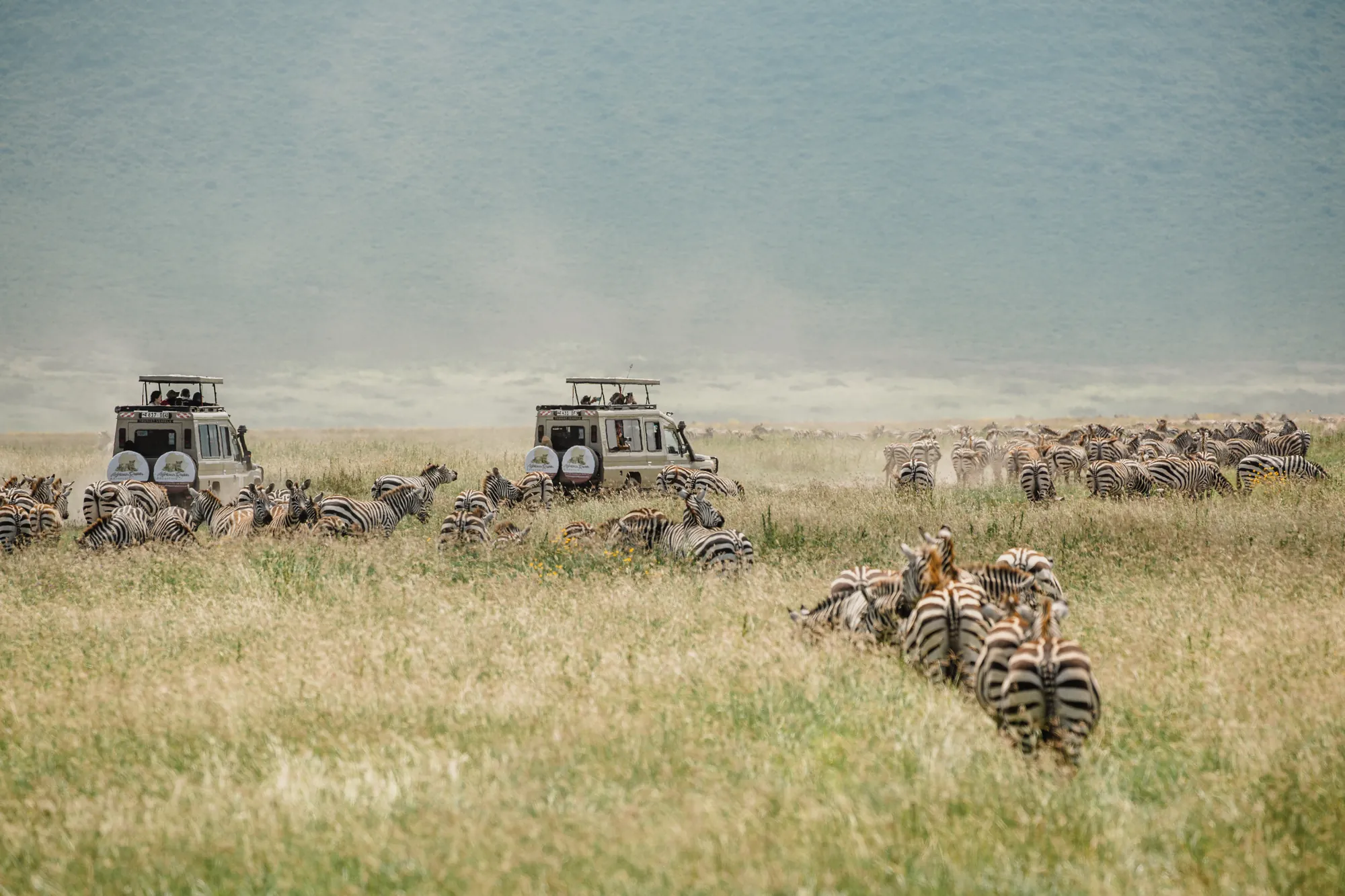
When the short rains arrive in November, the herds head south to the short-grass plains of the southern Serengeti and the Ndutu area. The volcanic soil there grows grass rich in minerals, which nursing mothers need. Between late January and early March, and usually peaking in February, most of the year's calves are born within a few weeks of each other.

So many newborns draw predators. Lion, cheetah and spotted hyena hunt across open ground where they are easy to watch, and because much of Ndutu lies in the Ngorongoro Conservation Area, vehicles are allowed to leave the track to follow them. For photographers this is often the best time of year.
Where to stay: Ndutu or the southern Serengeti. Many seasonal camps move here for these months.
April and May: the long rains
Once the southern plains are grazed down and the long rains set in, the herds begin to move north-west through the central Serengeti. This is the wettest time of year. Some camps close, and some tracks become muddy, but the landscape is green, there are very few vehicles and rates are at their lowest.
Where to stay: the central Serengeti around Seronera, which also has resident predators all year.
June and July: the Western Corridor and the Grumeti River
By June the herds have bunched up in the Western Corridor, a long arm of the park that reaches towards Lake Victoria, where they must cross the Grumeti River. The Grumeti crossings are less famous than those on the Mara and harder to time, but they are also much quieter. Large Nile crocodiles live in the river. Late June and July are also the start of the rut, when males fight for mates.
Where to stay: the Western Corridor or the central Serengeti.
July to October: the Mara River crossings
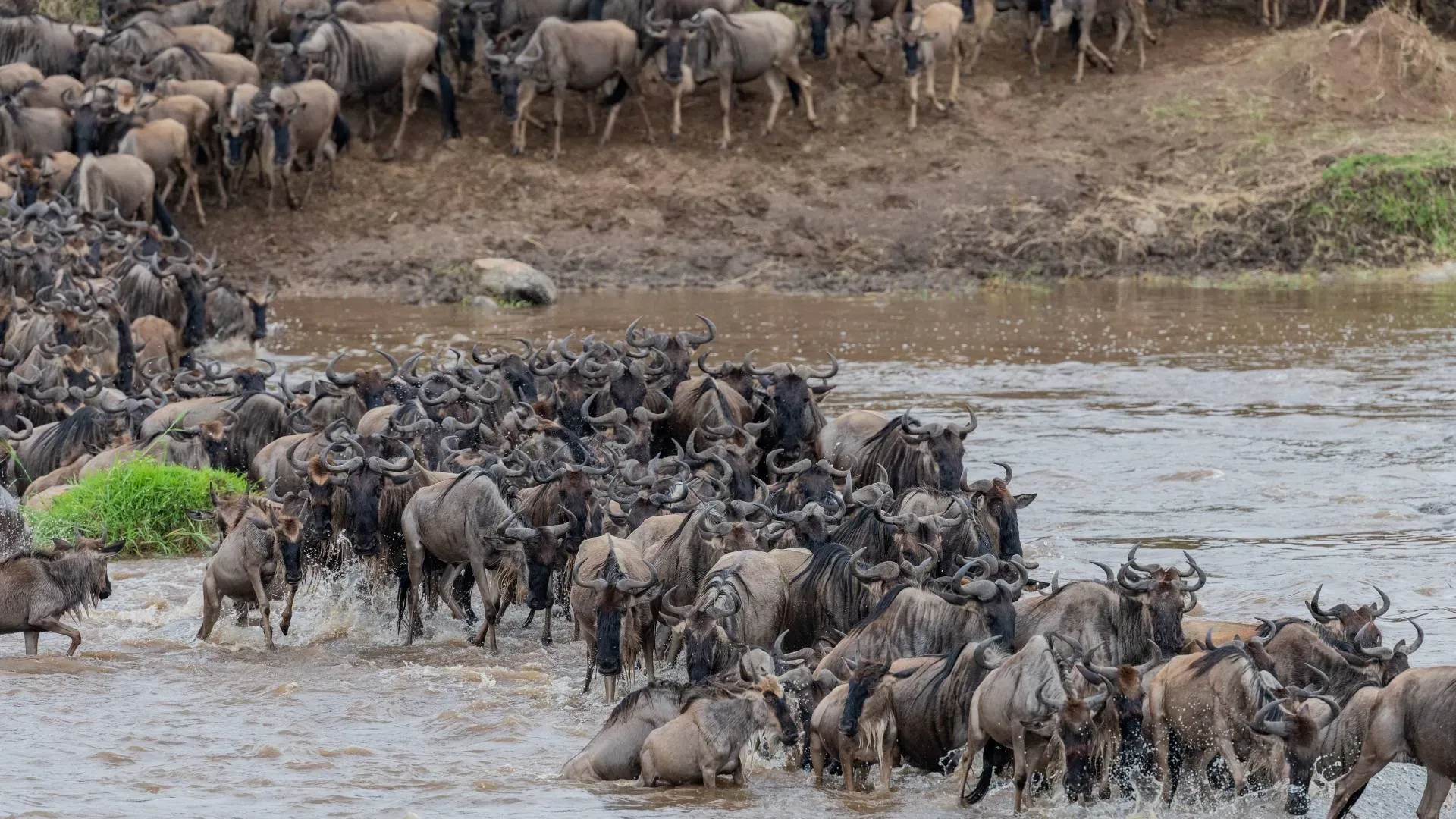
From around mid-July the herds reach the far north of the Serengeti and spill across the border into the Maasai Mara. In both areas they cross the Mara River, often more than once, as rain and grazing pull them back and forth. These are the scenes most people picture: thousands of animals plunging off the bank, crocodiles waiting below.

Crossings cannot be scheduled. Herds can gather on the bank for hours and turn away, or cross several times in a day. Allow at least three nights in the north and be prepared to wait. Camps for August and September book up many months ahead.
Where to stay: the northern Serengeti around Kogatende, or the Maasai Mara and its conservancies.
November: heading south again
With the short rains the herds leave the north and move back down through the eastern side of the Serengeti towards the southern plains, ready for calving to start again.
How to plan a migration safari
- Book the right area, not just the right park. The Serengeti is about 14,763 km². A camp in the wrong region can be a day's drive from the herds.
- Consider a mobile camp. Some camps move several times a year to stay close to the migration.
- Give it time. Three nights in one area is the minimum for river crossings. Two areas over five or six nights gives the best chance of seeing the herds at any time of year.
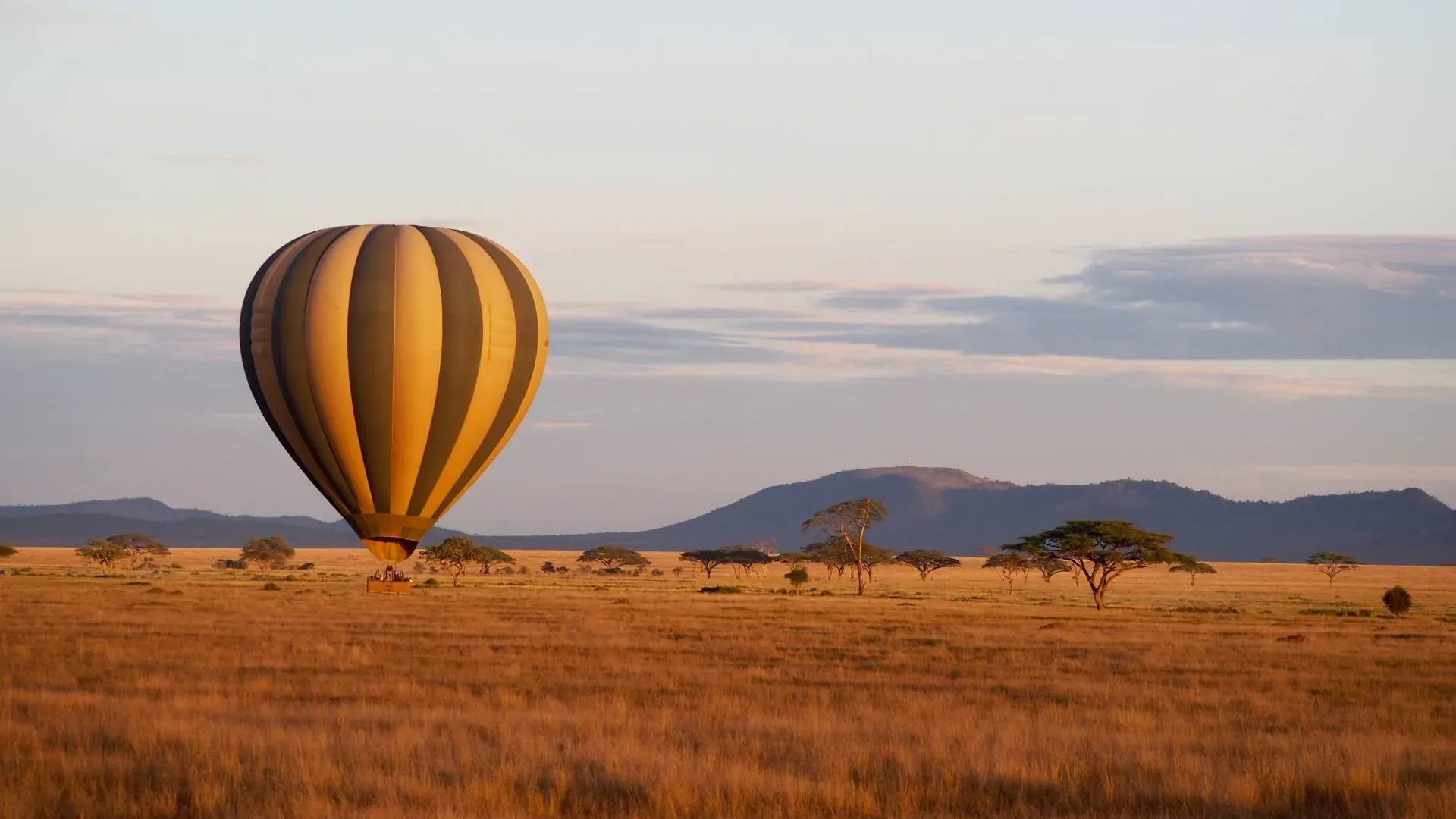
- Think about flying. Light aircraft from Arusha reach the northern and southern Serengeti in about an hour, saving a long day on the road.
- Don't ignore the rest of the park. Lion, leopard, elephant and giraffe do not migrate. Even when the herds are elsewhere, the Serengeti has some of the best game viewing in Africa.
Which month is best?
For calving and predator action, February. For river crossings, August and September. For the fewest people and the lowest prices, April, May or early November. If you can be flexible, tell us what you most want to see and we will suggest the dates and camps to match.
Keep reading: compare the Serengeti vs Masai Mara, check the cost of a Tanzania safari, or browse our Great Migration safaris. The Serengeti is protected by Tanzania National Parks.